


There’s a moment every year when Milan shifts gears. The traffic thins out, the car horns fall silent, and the city that’s always on the move gives way to a slower, almost silent version of itself. For those who stay—or for those arriving right now on vacation—it’s the best time to truly discover the city: not the glossy Milan of the tourist guides, but the summer version of the city, with its hidden courtyards, the clubs no one has ever recommended, and the canals you can cross by rowing instead of walking.
Here you won’t find the usual aperitif on the Navigli—you already know how to do that. You’ll find fifteen little-known spots and activities in Milan that are hosting events all summer long and beyond: places to return to, not just places to spend an evening.
Torre Velasca and the Crypt of San Giovanni in Conca
In the heart of the Missori neighborhood, the Torre Velasca has returned to the spotlight: after a lengthy restoration by Hines and Asti Architetti, Milan’s iconic skyscraper now houses the Sushisamba restaurant and will soon feature the panoramic Mett Suites. Just a short walk away, in Piazza Missori, you can still see the ruins of the apse of San Giovanni in Conca for free — the Milanese call it “el dent cariaa,” the decayed tooth. Below, the Romanesque crypt is open to visitors only a few days a month with volunteers from the Touring Club: it’s closed in July and August, so if you want to go inside, it’s best to plan your visit for September.
The Merlate and the Underground Chambers of the Sforza Castle
The Sforza Castle hides two routes that very few tourists know about: the Merlate Panoramiche, the rampart walk from which you can see Milan from atop the defensive walls, and the Strada Coperta della Ghirlanda, the only one of the castle’s legendary underground passages whose existence has been historically confirmed—the other rumors about secret tunnels and galleries remain unconfirmed speculation. The former can be visited on your own, while the latter is accessible only with a guide—often in the style of a detective story, complete with clues and a 15th-century murder mystery to solve. It’s a way to experience the city center away from the crowded courtyards.
Open Tuesday through Sunday; tickets range from about 10 to 20 euros.
Cascina Cuccagna
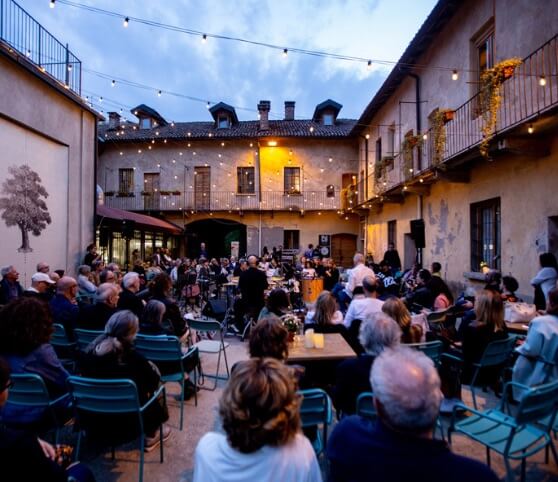
Between Porta Romana and Viale Umbria, this 17th-century farmhouse is one of the few corners of Milan that doesn’t slow down in the summer: open every day from 9 a.m. to midnight, it hosts a farmers’ market on Tuesday and Saturday afternoons and a free program of film, theater, and improv under the pergola. People go there for a lunch in the shade, an aperitif in the courtyard, or just to read a book, with the feeling of having left the city without moving a single meter.
Canoeing on the Naviglio Grande
Forget just watching them from a café table: you can also paddle along the Navigli. Navigliosport organizes kayak and canoe trips along the Naviglio Grande, from Gaggiano to the Darsena, with instructors who teach the basics even to those who’ve never held a paddle before. An unusual—and quite scenic—way to see Milan from the water’s surface, perhaps at sunset, when the light becomes softer.
Basic lessons start at around 20 euros.
The Flamingos of Villa Invernizzi

One of the best-kept—and most-photographed—secrets in downtown Milan: a small colony of pink flamingos lives in the private garden of Villa Invernizzi, visible for free by peering through the gate on Via dei Cappuccini. No ticket, no reservation: just walk by, look through the bars, and spend a few minutes wondering how it’s possible that in the Quadrilatero della Moda, just a stone’s throw from Corso Venezia, there’s a scene straight out of a nature documentary.
La Scighera
In Bovisa, near the Polytechnic, La Scighera is an Arci club that has been keeping Milan’s less glossy music scene alive for decades: folk and jazz concerts, Argentine tango milongas, and a theater festival dedicated to young people emigrating from Italy. With an Arci membership card, you can get in at affordable prices—often under 10 euros—among a crowd of university students and curious onlookers, far from the trendiest spots along the Navigli. The courtyard stays open even just for a beer, with no need for a scheduled event—though, like many Arci clubs, it scales back its concert schedule in August, so it’s best to check the online calendar before heading there.
Brera Botanical Garden

Behind the Pinacoteca, sheltered by a gate that very few people notice, lies an 18th-century garden commissioned by Maria Theresa of Austria: five thousand square meters of flower beds, centuries-old trees, and silence, right in the heart of Milan’s most touristy area. Admission is free, andthe garden often hosts guided tours, botanical watercolor workshops, and science cafés. It’s perfect for a break in the shade between exhibitions, to discover that there’s much more to Brera than what you see from Via Fiori Oscuri. Open Mon–Sat, 10 a.m.–6 p.m. in the summer.
Venetian-style rowing and rowing at the Canottieri San Cristoforo
Next to the little church of San Cristoforo, a historic location on the Alzaia del Naviglio Grande, this sports club teaches disciplines that almost no one practices in Milan: Venetian-style rowing, dragon boat racing, SUP, and rowing, with courses for beginners and open outings for members. It’s also the only club in Milan that takes students rowing all the way to the Darsena, on the very same waters where goods bound for the city once traveled. Trials and courses by reservation.
Rob de Matt
In the Dergano neighborhood, off the beaten path, this bistro with a garden and a synergistic vegetable patch employs people on social inclusion programs—former inmates, refugees, and people with mental health challenges—who have been trained in the kitchen by industry professionals. The food is good and authentic, with dishes ranging from 12 to 15 euros, served at outdoor tables and featuring themed evenings with live music. An aperitif here tastes just as it always has, but it holds a different meaning.
Hoepli Planetarium
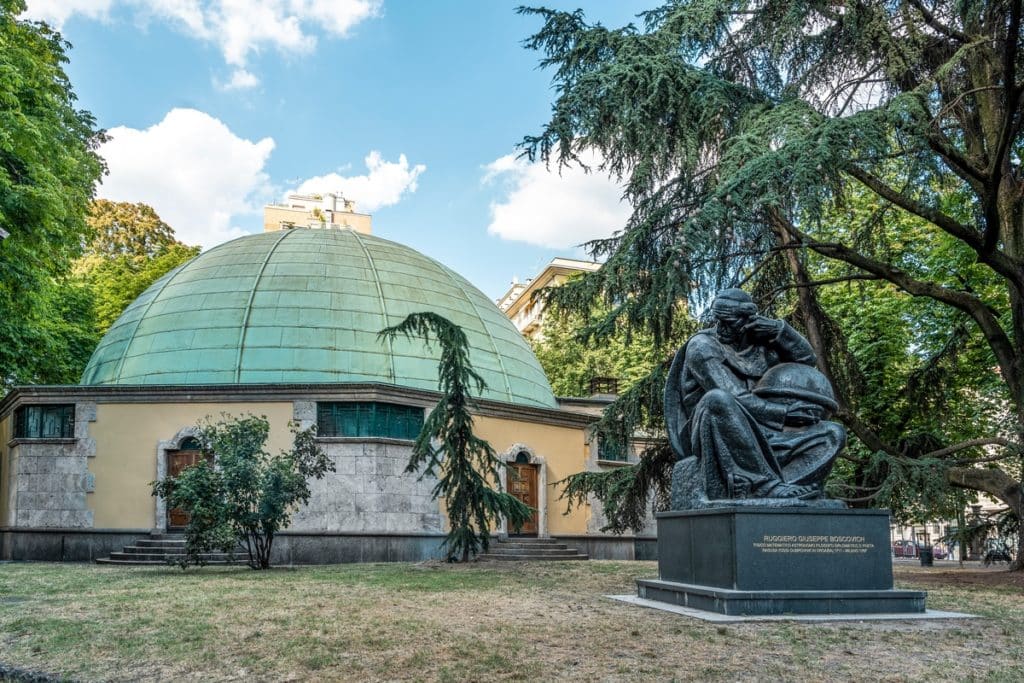
Beneath the dome designed by Piero Portaluppi, Italy’s largest planetarium tells the story of the night sky all summer long, with guided observations, lectures, and events dedicated to August’s shooting stars. It’s not a museum with fixed hours: you can only enter to attend the shows, which last about an hour and cost 5 euros (3 euros for reduced admission). An hour in the cool, literally under the stars, even when the thermometer outside reads 35 degrees.
Urban Cultural Sea
In the courtyard of a renovated 17th-century farmhouse in San Siro, every summer evening the Piazza di Cenni di Cambiamento becomes an open-air movie theater: films are watched with wireless headphones, among a mix of neighborhood residents and enthusiasts who’ve come specifically for the event. The program alternates between recent releases, arthouse films, and family-friendly evenings, with tickets priced at 6 euros (4.50 for reduced rates). Before or after the screening, the courtyard often hosts concerts and open mic nights as well.
Dialogue in the Dark
An hour in total darkness, guided by blind people through spaces explored solely through touch, hearing, and smell: this isn’t a simulation of blindness, but an invitation to communicate in a way that almost no one ever experiences. This unique exhibition, organized at the Institute for the Blind in Milan since 2005, is also one of the few activities in Milan perfect for an extremely hot afternoon, as it takes place entirely indoors—and, of course, is air-conditioned.
Reservations required; tickets range from 15 to 20 euros. The tour is closed for summer break from early August to early September, so it’s perfect for June, late July, or when things get back into full swing in September.
FAI Summer Evenings at Villa Necchi Campiglio
Every summer at sunset, the FAI opens several historic residences that are usually only open during the day. In Milan, the spotlight is on Villa Necchi Campiglio, a rationalist gem from the 1930s with a pool in the garden: aperitifs by the pool, candles, and live music ranging from jazz to swing and flamenco, in an atmosphere you simply can’t experience when the villa is crowded during the day. There are only a few dates, often by reservation: it’s more of a seasonal ritual to mark on your calendar than a regular event.
Circolo Magnolia
At the Idroscalo, amid the greenery surrounding the “Milanese sea,” this historic ARCI club hosts indie, electronic, and international concerts every summer on four different stages, as well as film screenings, DJ sets, and culinary events. Ticket prices vary widely depending on the artist, ranging from just a few euros for DJ sets to the season’s most anticipated concerts. Even if it’s just for a beer at sunset on the lawn, it remains one of the places where you can truly experience the Milanese summer.
The Murals of Ortica
The Ortica neighborhood, an eastern suburb often overlooked by guidebooks, has become an open-air museum over the years thanks to the Or.Me – Ortica Memoria project: more than a dozen murals that tell the story of 20th-century Milan, from the singer-songwriters of Milanese folk music to the victims of the mafia. The most spectacular piece is the “Duomo dell’Ortica” on Via Pitteri, featuring a painted Madonnina over twenty meters tall. You can visit it on foot, for free, at any time.
And to round out the day, about a 15- to 20-minute walk away is the Piscina Romano on Via Zanoia, one of the last historic public swimming pools in Milan still open in the summer: built in 1929, it remains open until August 30, with tickets costing 9 euros on weekdays (10 on weekends).
