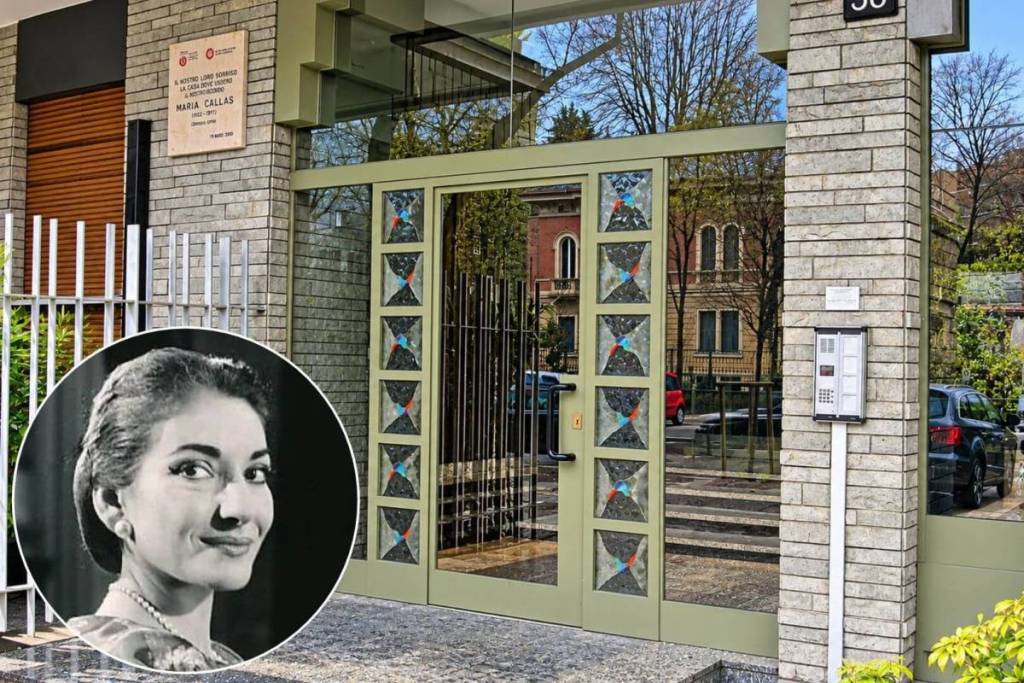

On Via Buonarroti, just a short walk from the Buonarroti stop on the M1 line, there is an apartment building like so many others—the kind you walk past without even looking up. Yet in the 1950s, right here, one of opera’s most famous voices would return home after her triumphs at La Scala.
A gold chandelier, a lucky painting, and Biki’s clothes: what Maria Callas’s villa in Milan was like
Meneghini was the one who wanted the house; he had it built in 1955, at the height of his wife’s golden years. Between 1954 and 1958, Callas was the queen of La Scala and one of the iconic faces of Milan during the economic boom.
Inside were antique furnishings, heavy drapes, and original paintings. On the piano stood a golden candelabra, a gift from La Scala in 1955. Next to her jewelry, she kept her lucky charm—a “Holy Family” by the painter Giambettino Cignaroli—which she proudly showed to the readers of *Grazia* in December 1957.
And in April 1958, she had her picture taken in those rooms wearing dresses by Biki, the dressmaker to the ladies of Milan’s high society.
In Sirmione, her villa still stands; in Milan, only a plaque remains (at a different street number)
Herein lies the paradox. On Lake Garda, in Sirmione, the villa where the Callas-Meneghini couple spent their vacations still stands, complete with its garden and a lake-shaped swimming pool.
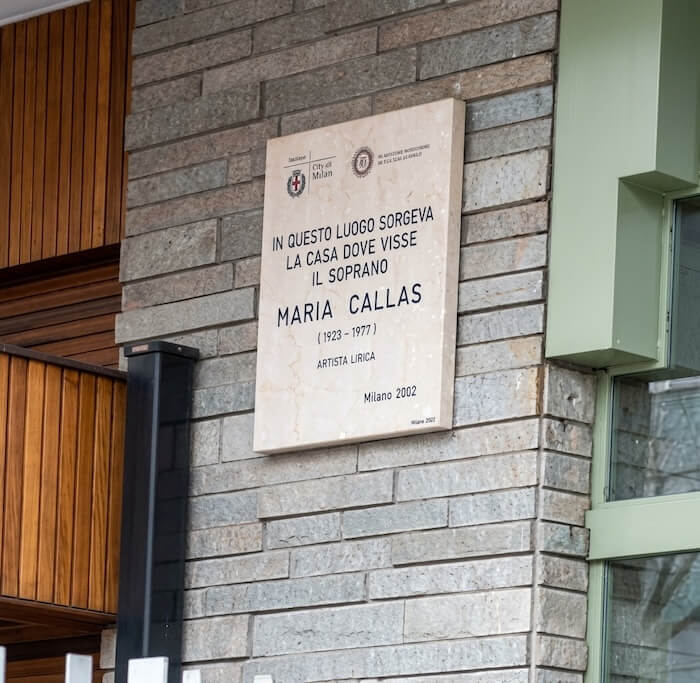
In Milan, however, a plaque commemorates Callas on a building constructed later, on the site of her former home.
There are still those who remember it. A Milanese man recounted passing by it every day as a child, and that it was that very villa that sparked his passion for the soprano.
From Onassis to Demolition: What We Know (and What We Don’t) About the Villa’s Demise
The end of their relationship is well known. In the summer of 1959, Callas and Meneghini boarded Aristotle Onassis’s yacht, and by November she was in court in Brescia filing for separation.
She would return to La Scala again, from *Poliuto* in 1960 until her farewell performance as Medea in 1962.
As for the villa itself, however, historical records are sparse. It is known that it was demolished to make way for today’s apartment building, but it is unclear when this occurred or for which project.
It is one of the missing pieces in the history of Milan’s vanished celebrity homes.
The most illustrious neighbor: Casa Verdi, where Giuseppe Verdi is buried, just a stone’s throw from the villa
The most beautiful detail is just a few meters away, in Piazza Buonarroti. Here stands Casa Verdi, the retirement home for musicians that Giuseppe Verdi considered his most cherished work.
He and his wife, Giuseppina Strepponi, are buried in the crypt, which is usually open to the public during daytime hours; it’s best to check the official website before visiting.
In short, the most famous soprano of the 20th century lived just a stone’s throw from the home that welcomes singers at the end of their careers. The next time you pass by Via Buonarroti, look up: the villa is no longer there, but knowing where it stood changes the street a little.
Address: Via Michelangelo Buonarroti 38, Milan (MM1 Buonarroti).