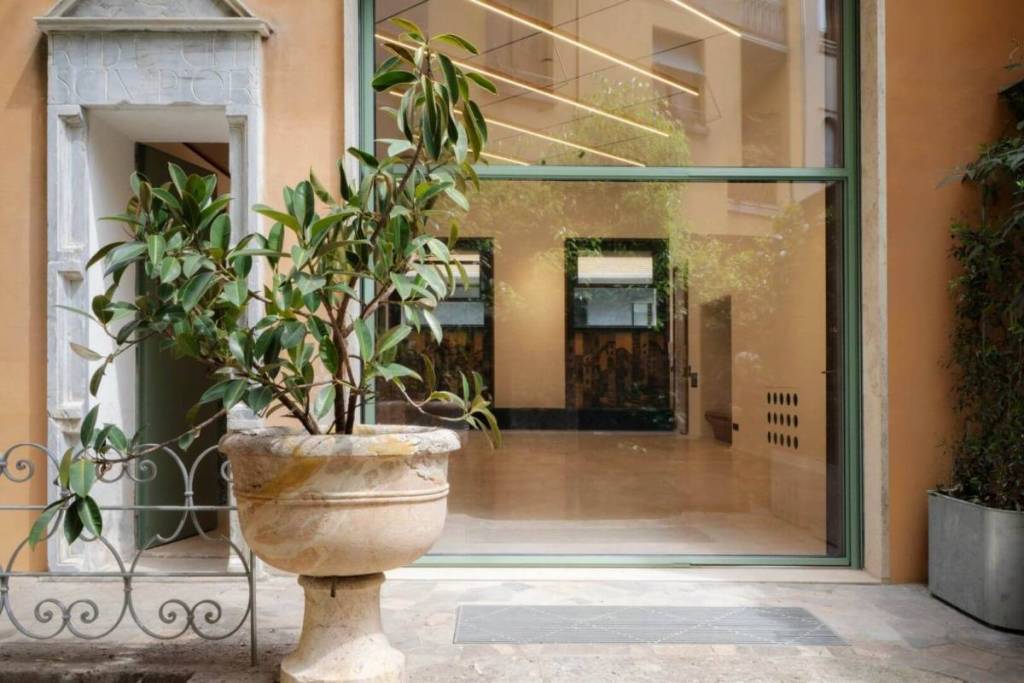

The Last Supper is a five-minute walk away, as is the Science Museum. In between, at Via Morozzo della Rocca 5, there’s a large doorway that almost all of us have always walked right past.
Starting in September, it’s worth stopping by.
After two years of restoration, the studio of Piero Portaluppi—the architect behind Villa Necchi and the Planetarium—has reopened in Milan.
Inside, there is a floor composed of hundreds of marble slabs sourced from quarries all over the world, some of which are now depleted or no longer accessible.
Beneath the courtyard lies a World War II air-raid shelter that had long been unused.
It was brought back to life by his great-grandson, architect Filippo Taidelli, who moved his studio here.
These historic spaces are home to Studio Portaluppi, a cultural hub curated by Julia Koropoulos.
Visits are available during monthly open studio events by reservation, and the most convenient stops are M1 Conciliazione and M2 Sant’Ambrogio.
Marble from around the world beneath your feet: the floor that Portaluppi used as a catalog
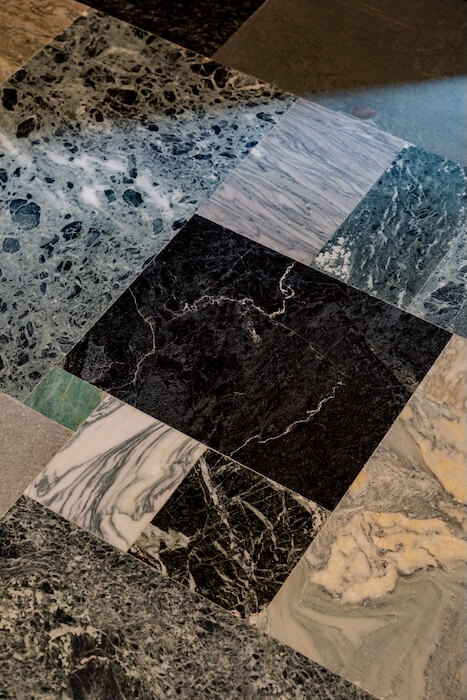
The highlight is the conference room. The floor consists of over 400 pieces, according to the firm, and more than 500 according to Exibart, and some of those stones can no longer be found today.
It wasn’t just an aesthetic choice. Portaluppi used it as a sample collection to show clients—an archive of materials integrated directly into the architecture.
The restoration has brought its colors and veining back to the surface.
In January 2027, the floor will be the focus of “Tatto,” a project that will trace the provenance and history of its stones.
The air-raid shelter hidden beneath the courtyard: you enter through a drawbridge
During World War II, an air-raid shelter was built in the basement, which then remained unused for a long time.
Taidelli’s team identified and reconstructed it, thanks in part to the original drawings preserved in the archives.
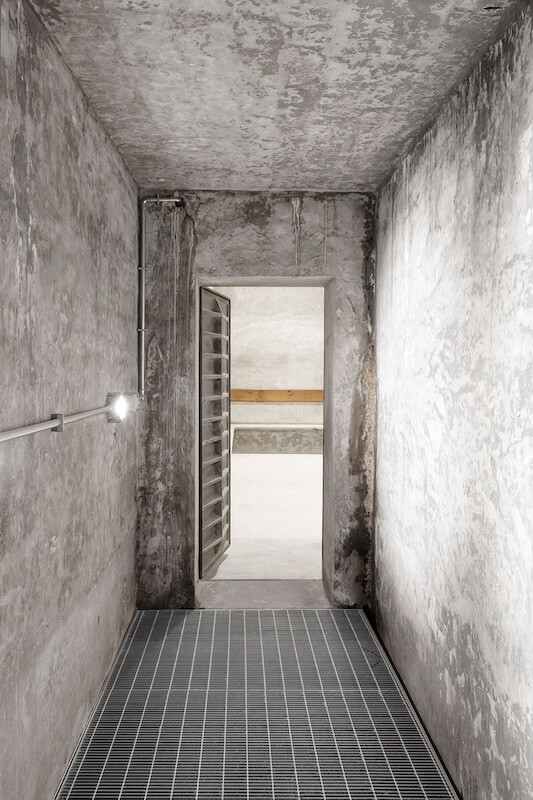
Concrete walls, reinforced doors, and stone benches remain where they were. Today, you descend from the courtyard via a metal walkway that functions like a drawbridge: when closed, it disappears into the floor.
On November 8, the bunker kicked off its cultural program with a concert. The set list included excerpts from Olivier Messiaen’s *Quatuor pour la fin du Temps*, first performed in 1941 in a prisoner-of-war camp: all three sessions were sold out.
Inside the reborn studio: what Portaluppi’s great-grandson changed (and what he preserved)
When Taidelli entered the studio in 2024 to begin the project, he found it dark, closed off, and almost intimidating.
Today, the courtyard opens into the studio through a large opening in the atrium. Among the plants are a statue of Minerva and other pieces from Portaluppi’s collection, along with fragments of buildings damaged during the war.
Between the meeting room and the studio, three pairs of small windows evoke the portholes of transatlantic liners—a recurring passion of the architect’s.
How to visit Portaluppi’s studio (and why you should book right away)
The studio is open to the public with monthly open studio tours led by curator Julia Koropoulos. Reservations can be made on Eventbrite, and spots tend to fill up quickly.
Upcoming events are announced on studioportaluppi.com, in the newsletter, and on Instagram (@studioportaluppi).
The same goes for upcoming events, starting with Tatto in January. If you’re looking for cultural experiences in Milan that are off the beaten path, keep an eye on the official channels.
Address: Via Morozzo della Rocca 5, Milan (M1 Conciliazione, M2 Sant’Ambrogio).
Portaluppi Tour: 4 masterpieces to see in Milan—one is just five minutes from here
The studio is just the beginning. These are some of the iconic buildings designed by Portaluppi and the historic sites in Milan that bear his signature:
- Villa Necchi Campiglio (Via Mozart 14): his masterpiece, managed by the FAI and open Wednesday through Sunday. Since May, the attic has housed Portaluppi’s archive and 19 original pieces of furniture brought directly from Via Morozzo della Rocca.
- Ulrico Hoepli Planetarium (Corso Venezia 57, Giardini Montanelli): visitors can enter to attend the scheduled shows.
- Casa Corbellini-Wassermann: in Città Studi, one of the city’s rationalist gems.
- Casa degli Atellani (65 Corso Magenta): a five-minute walk from the studio. Portaluppi restored it in the early 1920s, and today it is famous for Leonardo’s Vineyard.
The next time you walk down Via Morozzo della Rocca, you’ll know what lies beneath your feet.