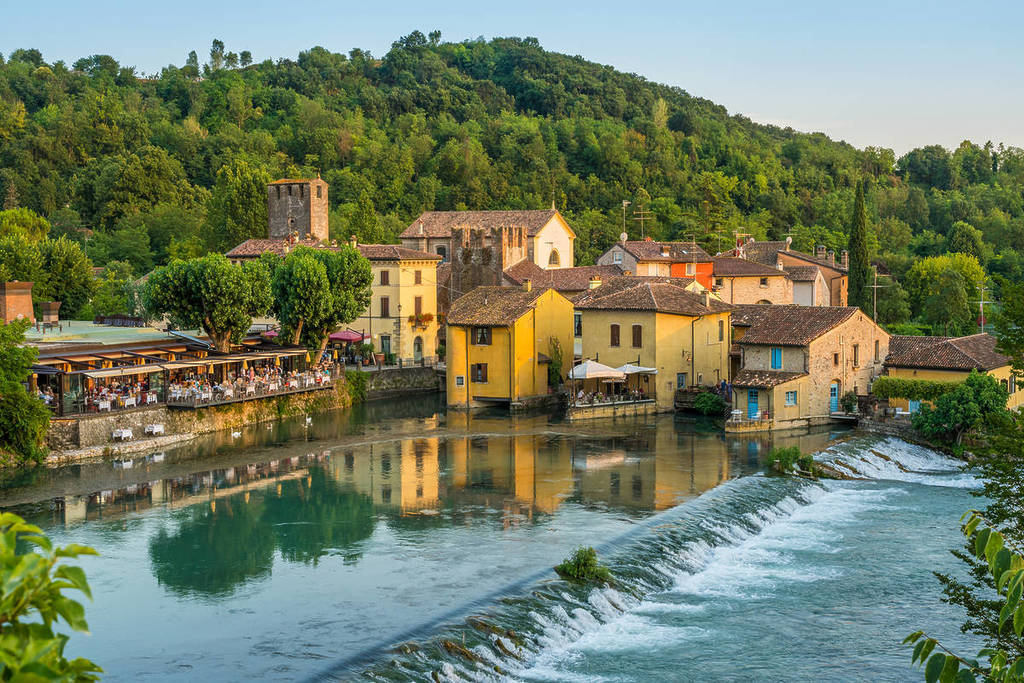

There is a precise moment, just after crossing the threshold of the Visconti Bridge, when the noise of traffic and the frenzy of the city become a faded memory. Here, just over a hundred kilometers from the Madonnina, the rhythm is not dictated by clocks, but by the constant flow of the Mincio. The houses don’t simply overlook the river: they emerge from it, with their foundations submerged in the current and the wheels of the old mills continuing to turn, tirelessly, as if the Middle Ages had never ended. You know the village of Belle in “Beauty and the Beast”? With all the villagers leaning out of their windows shouting “bon jour” in unison—well, the atmosphere here is similar….
It’s not Venice, and it’s not the Navigli. It’s a tiny cluster of stone houses nestled in the riverbed, a place so perfect it looks like the movie set of a fairy tale, yet you can reach it in less than two hours by car from Milan.
This place has a name that evokes intimacy: Borghetto.
Borghetto, the village within the river
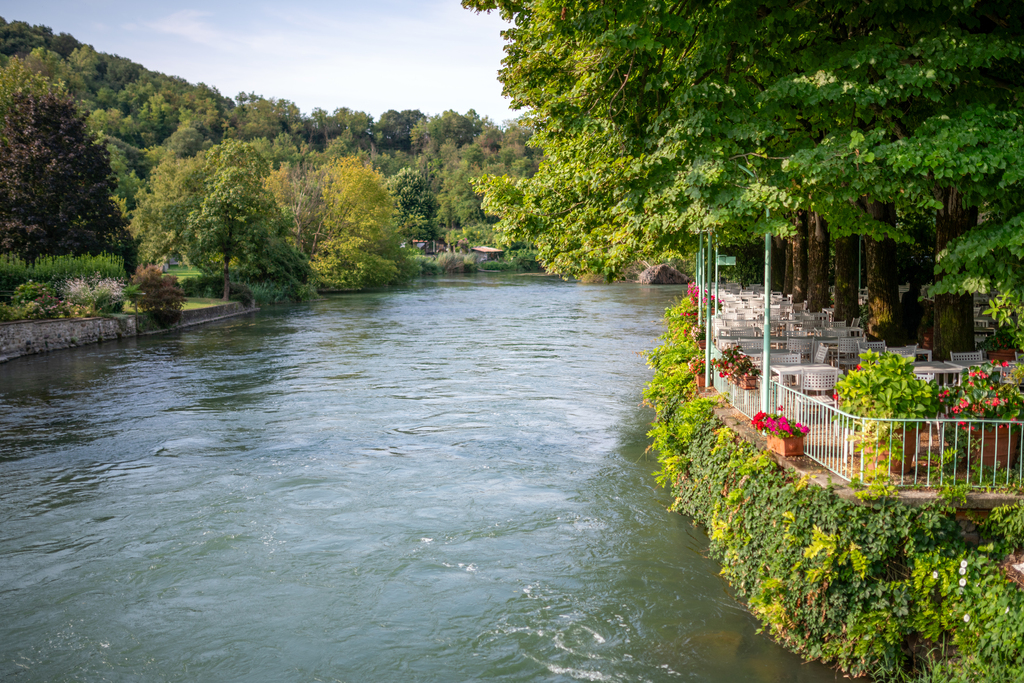
They call it the “village of mills,” but the truth is that Borghetto sul Mincio is an architectural paradox. Built with ancient wisdom right where the water is most alive, this village suspended between land and river seems to float on a fragile and magical balance. If you’re looking for the ultimate getaway for a weekend away from it all, you’ve found it: among fortified bridges and the promise of a plate of tortellini that , around here, tastes like legend—
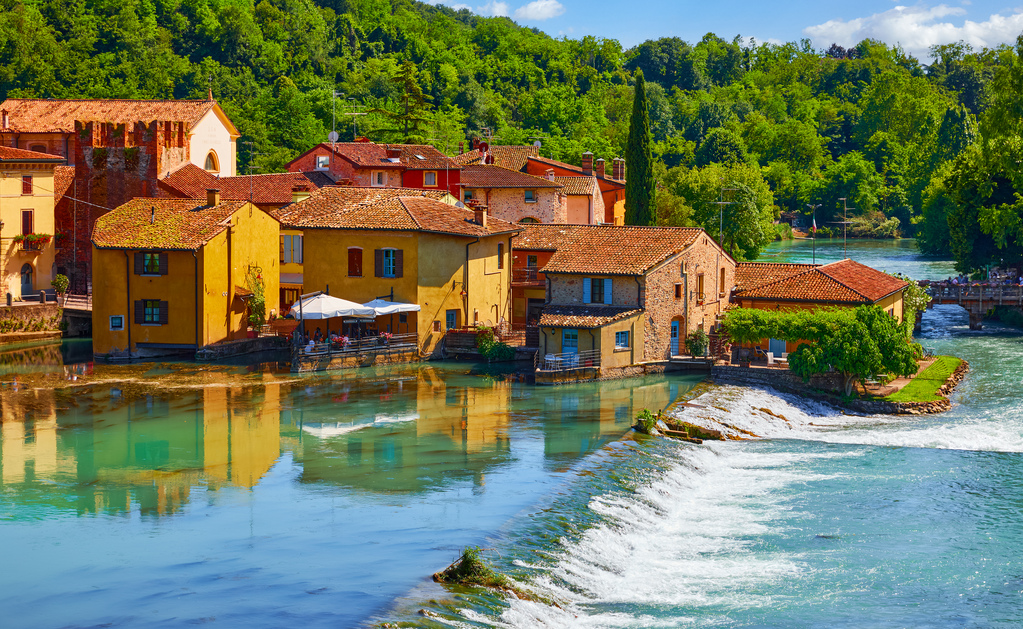
What makes Borghetto unique is not just its beauty, but its boldness. The houses of Borghetto are not simply buildings on the riverbank, but extensions of the river itself.
Walking through its narrow streets means feeling the breath of the Mincio vibrating beneath your feet. The iconic architectural feature is undoubtedlythe ancient watermill: once the beating heart of the local economy, today these structures with their enormous wooden blades continue to turn, hypnotic, blending perfectly with the café terraces and pastel-colored facades.
But your gaze is inevitably drawn to the Ponte Visconteo. Don’t just call it a bridge: it’s a 650-meter-long “fortified dam.” Built by Gian Galeazzo Visconti to protect the borders of the Duchy of Milan, today it’s the go-to viewpoint for snapping stunning panoramic photos and enjoying a magical view of the valley.
The Knot of Love: the legend you can eat
If Borghetto’s architecture defies the water, its cuisine defies the willpower of anyone trying to stick to a diet. You can’t say you’ve truly visited this place without sitting down to a plate of Nodi d’Amore. Don’t just call them tortellini: here, pasta is a matter of folklore, of hands moving swiftly, and of a dough so thin it’s almost transparent, “like silk.” There’s a legend behind this dough:
Legend tells of an impossible love between the nymph Silvia and Captain Malco: a silk handkerchief tied by the two lovers on the banks of the Mincio as a pledge of eternal love, before disappearing into the river’s waters. Today, that knot is recreated every day in the village’s pasta factories, filled with a mix of braised meats that is a secret passed down from generation to generation.
The ultimate experience? Booking a table at one of the small restaurants with a terrace jutting out over the current. As the river flows beneath your feet and the light valley breeze ruffles your hair, tasting the Nodi pasta topped with melted butter and sage isn’t just a meal—it’s the reason the two-hour drive from Milan was worth it. It’s the taste of a perfect Sunday. It rejuvenates you. Be careful, though, not to wear heels but comfortable shoes; the village streets are unforgiving to those wearing uncomfortable shoes.
And after lunch, what to do

Borghetto can be explored in no time… If you take a trip there, you might consider combining it with a visit to one of the world’s most beautiful parks nearby: once you’ve left the mills and legends behind, just walk up the hill for a few minutes to find yourself face-to-face with another masterpiece. If Borghetto is a masterpiece of stone and water, the Sigurtà Garden Park is a triumph of earth and flowers. Often recognized as one of the most beautiful parks in Europe, it is not simply a garden, but 60 hectares of manicured hills, ponds covered with water lilies, and paths that seem to have been painted by an Impressionist artist.
It’s the ideal place to unwind from the stresses of daily life without rushing and breathe in a bit of natural beauty amidst flowers, plants, and well-being
What about you? Would you organize a trip there?