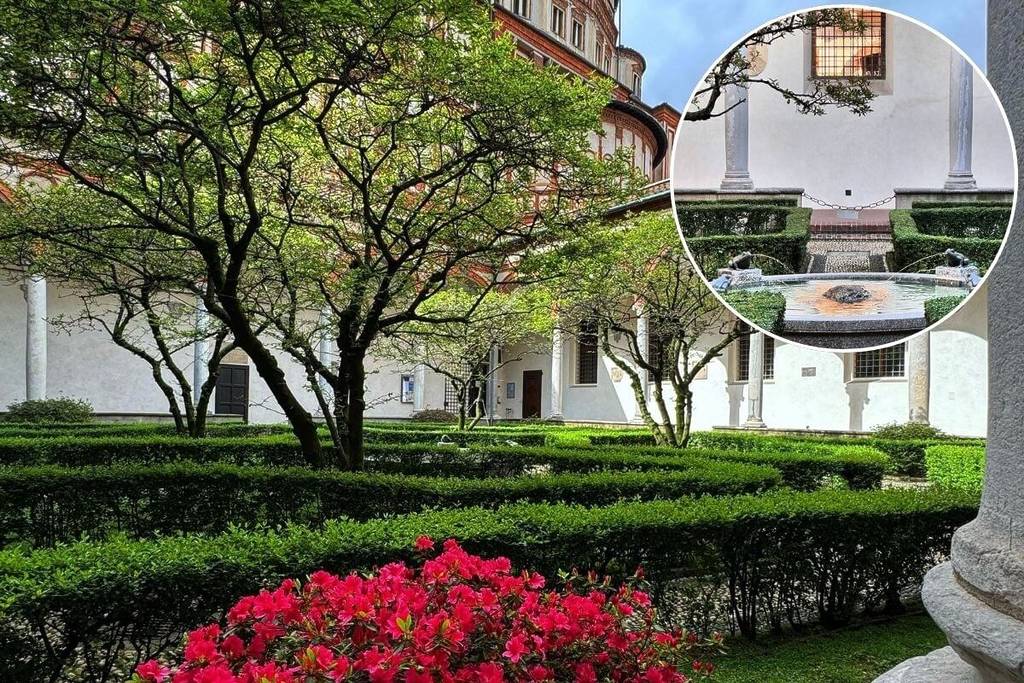

There is a paradox that is unique to Milan and plays out every day in Piazza Santa Maria delle Grazie. While thousands of people queue up months in advance for a few minutes in front of The Last Supper, less than ten meters away there is a place of stunning beauty, completely free and, incredibly, almost empty.
This is the Chiostro delle Rane, Bramante’s treasure chest, representing a true Zen escape from the chaos of the city. If you are looking for a cultural experience of the highest level without the hassle of booking, this is the place that will change the way you see Milan.
Donato Bramante’s “unfinished” perfection
Crossing the threshold of the Chiostro delle Rane means entering an area where geometry becomes emotion. Designed at the end of the 15th century by Donato Bramante on behalf of Ludovico il Moro, this space is an exceptional example of Renaissance architecture.
The cloister is a perfect square, with five arches on each side supported by marble columns that seem to dance in the spring light.
If you look closely at the walls, you will notice wave-like graffiti and plant decorations that seem almost sketchy. Art historians believe that they were never finished, perhaps due to the fall of the Sforza dynasty. This “imperfection” gives the cloister an enigmatic charm, as if time had stopped in 1497, leaving us with the task of completing the work with our eyes.
Every detail, from the ornate capitals to the terracotta profiles, is designed to convey a sense of order and peace that we would today describe as therapeutic.
The miracle of the heroic friars: when the Cloister defied the bombs
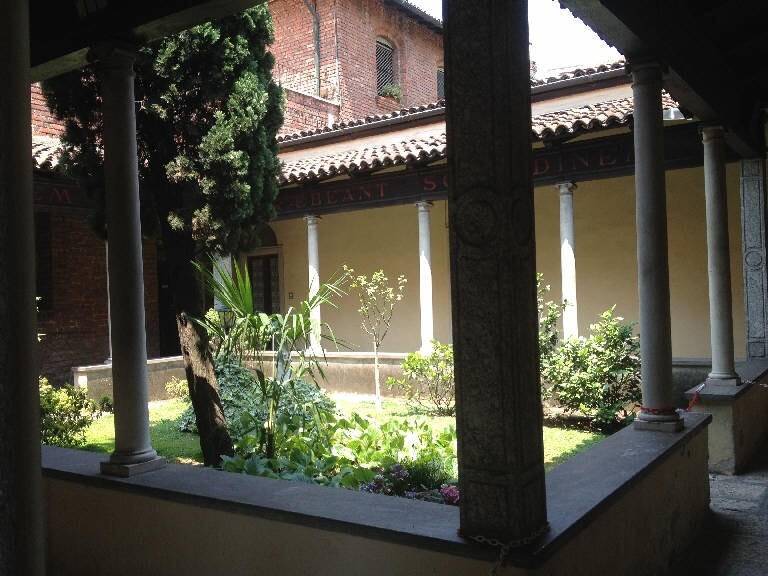
It’s not just a question of aesthetics; this place exudes a history of incredible resilience. During the terrible bombings of 1943, which devastated much of the Grazie complex, the Chiostro delle Rane was hit by incendiary bombs.
As the sky over Milan turned red, the Dominican friars performed a heroic deed: instead of seeking shelter, they remained to fight the flames in the courtyard.
They managed to extinguish the fire with their bare hands and makeshift tools, saving Bramante’s columns and small bronze frogs from total destruction. When you walk under these arcades, you are treading on ground that was defended with life.
This is why the silence here is not empty, but full of meaning. It is the silence of those who protected beauty so that you could enjoy it today, free of charge.
Why visit in spring: the secret of the bronze frogs
The unusual name of this place comes from the delightful circular fountain that occupies the center of the cloister. It is adorned with four bronze frog sculptures that look almost alive as they spout water.
In spring, the rhythmic sound of the fountain is the only soundtrack allowed. It is the time of year when the internal garden bursts into green and the sun hits the red bricks of Bramante’s tribune, creating incredible color contrasts.
The Chiostro delle Rane is proof that true exclusivity in Milan is not something you buy at a high price, but something you discover with curiosity. It is the ideal place for a different kind of lunch break, to read a book away from the honking horns of Corso Magenta, or to take photos that look like they came out of an art history textbook, without any tourists ruining the shot.
Visitor’s guide: how to enjoy Bramante’s oasis
You don’t need a membership card or online reservations three months in advance to access this UNESCO paradise. Here’s how to do it:
📍 Entrance: you can enter directly from the back of the Basilica of Santa Maria delle Grazie or from the side entrance on Via Caradosso. Look for the terracotta canopy with the inscription “LAVS DEO. “
💶 Cost: admission is free. It is a common good returned to citizens and tourists.
🕐 Opening hours: the Cloister is usually accessible during the Basilica’s opening hours (approximately 9:30 a.m. to 12:30 p.m. and 3:30 p.m. to 6:30 p.m.). However, as it is a place of worship, opening hours may vary due to celebrations.
🚇 How to get there: Metro M1 (Red Line) Conciliazione or Cadorna stop. It’s just a few minutes’ walk.