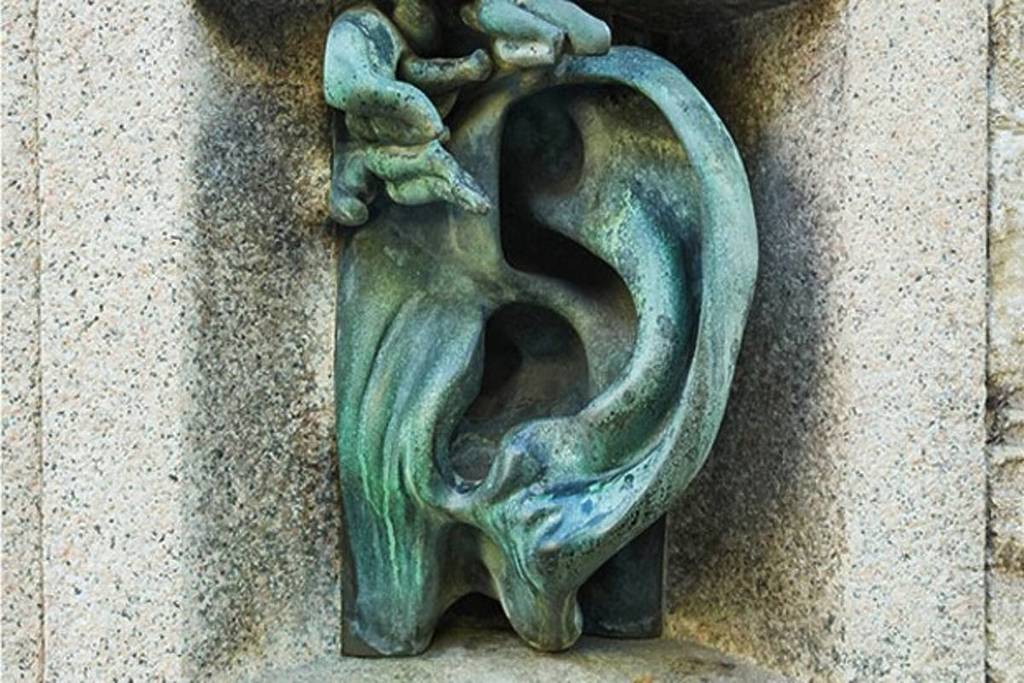
Imagine walking among the elegant and quiet buildings in the center of Milan and suddenly feeling like you are being watched… by an ear. It is not a surreal hallucination, but a small bronze detail set in the marble at number 10 Via Serbelloni. Almost no one notices it, yet this auricle, dating back to the 1930s, holds a curious technological secret: a communication system that was decades ahead of modern intercoms.
Created by inventor and sculptor Adolfo Wildt, this ear was not intended as a decoration or a whim of the family who lived in the building, but had a specific function that few people know about.
The main function
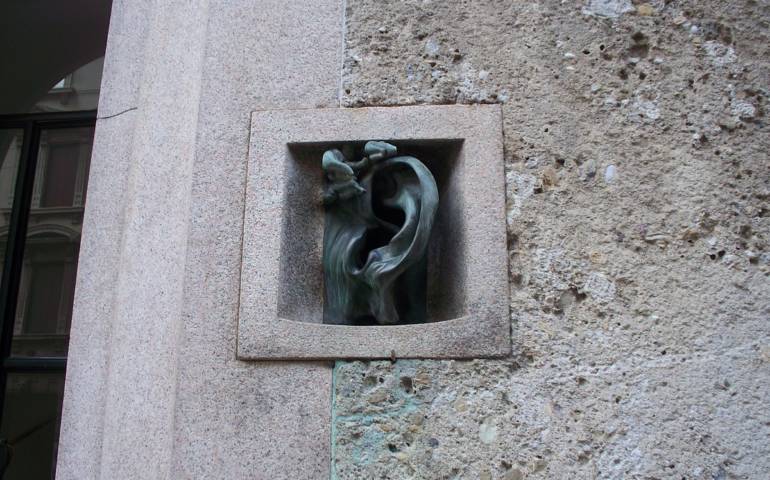 Photo:
www.vistanet.it
At a time when intercoms did not yet exist, this ear functioned as the end of an acoustic tube. Anyone arriving at the door spoke directly into the ear, and their voice was transmitted to the doorman inside the building. To all intents and purposes, it was one of the first domestic communication systems used in Milan.
Where are we?
We are at Casa Sola-Busca in Via Serbelloni, 10, in the heart of the Quadrilatero del Silenzio (Quadrangle of Silence). A few steps away from Villa Invernizzi and its iconic pink flamingos. A corner of the city where the elegance of Art Nouveau architecture coexists with urban legends and hidden mysteries, visible only to those who know how to observe.
The ear today: the experience
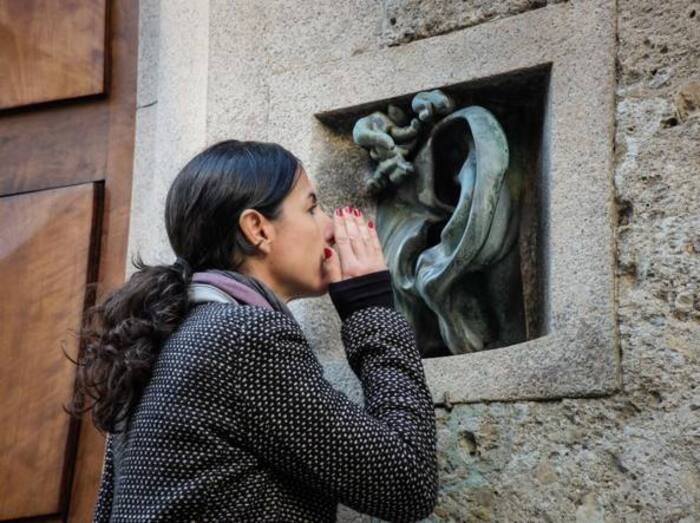
Today, the ear no longer functions as an intercom; it has been left for purely decorative and artistic purposes. A true urban legend has grown up around it, one that few people know about: despite being decommissioned, the ear has never stopped ‘listening’. Over time, a habit has developed among the Milanese: it is said that whispering a wish or a secret into the bronze ear canal can increase the chances of it coming true.
 La Presse
Who was Adolfo Wildt
Adolfo Wildt, known as the ‘master of polished marble’, was one of the most innovative and controversial sculptors of the Italian 20th century. His works, often charged with intense drama and an almost spectral charm, are displayed in the most important international museums. In Milan, the Ear in Via Serbelloni shows Wildt’s more ‘pop’ and functional side: an example of how art could be integrated into everyday life without losing its disturbing magnetism.