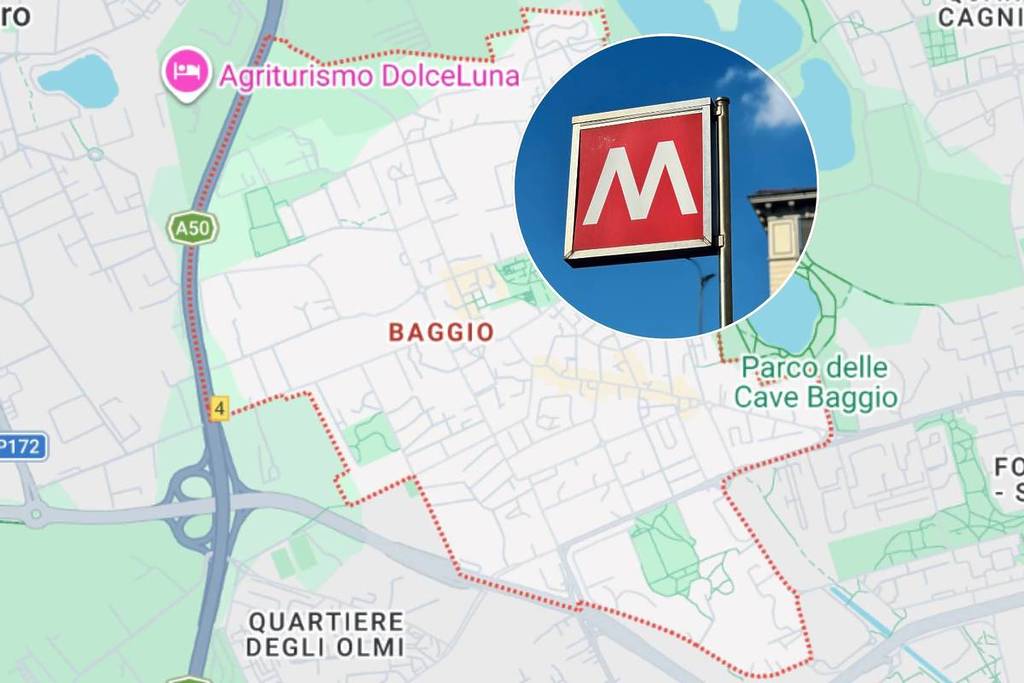

Milan’s oldest metro line is extending westward. Work on the extension of the M1 metro line from Bisceglie to Baggio officially began on February 25. Three new stations are planned, connecting the historic neighborhood to the city center in about 20 minutes . The plan calls for a route just over 3 kilometers long that will run entirely underground, but it will also involve the redevelopment of the surrounding surface areas, with new green spaces and facilities designed for residents, such as basketball courts and a skate park.
The numbers behind the M1 extension: costs, timelines, and passenger estimates
One of the objectives of this extension of the M1 line is certainly to improve connections between some of Milan’s most populous western neighborhoods and neighboring municipalities such as Cesano Boscone, Settimo Milanese, and Cusago. According to Public Works Councilor Marco Granelli, residents living within 1.5 km of the three new stations— Parri-Valsesia, Baggio, and Olmi—alone will form a catchment area of approximately 60,000 users who will gain greater proximity to the city center. Mobility Councilor Arianna Censi also noted that the new stations are expected to serve 7.5 million passengers annually.
The extension of the M1 line to Baggio will be carried out by a consortium led by Eteria together with Ghella and CMB, at a total cost of 362 million euros, funded by the State and the City of Milan. Metropolitana Milanese (MM) will oversee all phases of the construction and the project in general, which should ensure seamless integration of the stations, with convenient access points on busy streets such as Via Valsesia or within 700 meters of the center of Cesano Boscone. The three new stations are expected to be completed and become operational in about five and a half years.