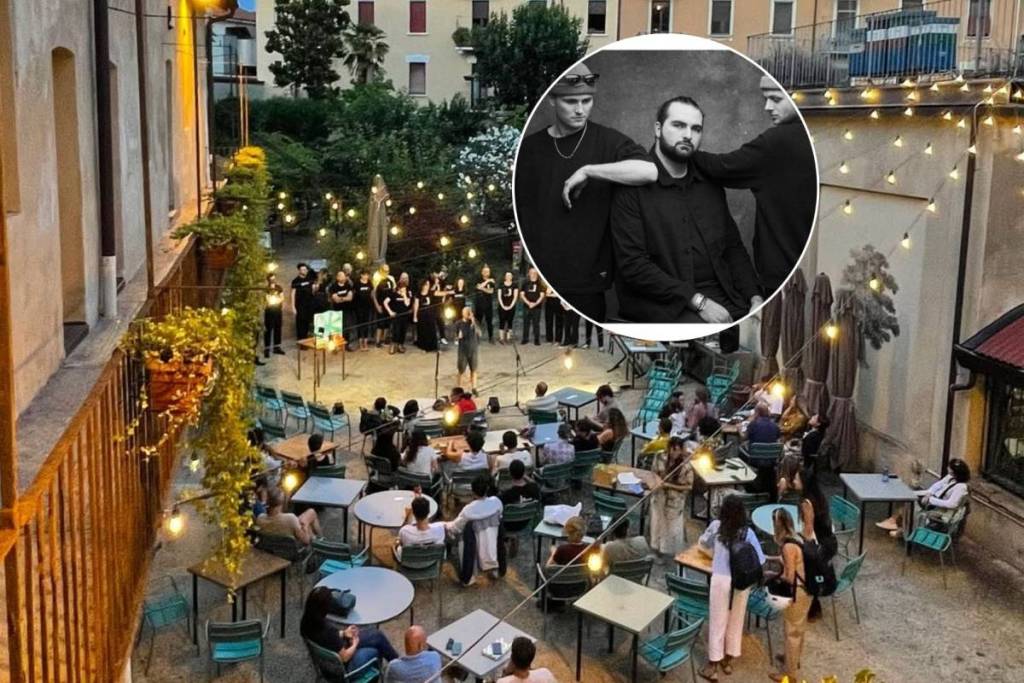

Ferragosto is approaching, and amid barbecues, day trips, and family lunches, this year brings a little bonus: it falls on a Saturday—perfect for those who can extend their weekend away from the city. But even those staying in Milan can treat themselves to a taste of summer with a rural flair, without sacrificing the atmosphere of one of the city’s liveliest neighborhoods. On August 15, in fact, a historic spot in Porta Romana will host a jazz evening titled “ ” with free admission.
Elæna: Jazz-Progressive Ferragosto at Cascina
On Saturday, August 15, Cascina Cucagna will host the Swiss trio Elæna for a double set at 7:30 p.m. and 9:30 p.m., with free admission both times. The Lausanne-based group consists of Natan Niddam (keyboards, synthesizers, and vocals), Yoann Maeder (guitar, bass, and backing vocals), and Damien Sigrand (drums and backing vocals). Their sound blends jazz, groove, and progressive rock with electronic elements and neo-soul influences, drawing inspiration from artists ranging from Radiohead to Robert Glasper. The three musicians will perform tracks from *Birds Whisper*, their album characterized by intimate and enveloping atmospheres.
🎟️Admission is free
A Bit of History About Cascina Cuccagna
Cascina Cuccagna, in the Porta Romana neighborhood , is a rare remnant of rural Milan that survived the city’s expansion and has now been restored to public life. Its history dates back to the 18th century: it appears in the Catasto Teresiano of 1722 under the name “Cassina Torchio, also known as Preganella” and belonged to the Fatebenefratelli, who cultivated medicinal herbs on the surrounding land forthe Ospedale Maggiore.
Originally built in an L-shape and expanded in the 19th century to take on an E-shape, the farmhouse combined living spaces with productive activities, including a wine press powered by water from an irrigation canal. In the 1920s, it took the name Cuccagna—inherited from a neighboring farmhouse demolished during the construction of the new ring road—and became home to artisan workshops and a tavern. After being transferred to the municipal government in 1984 and a long period of neglect, a community-led restoration effort transformed it into a public space dedicated to culture, community, participation, and sustainability.