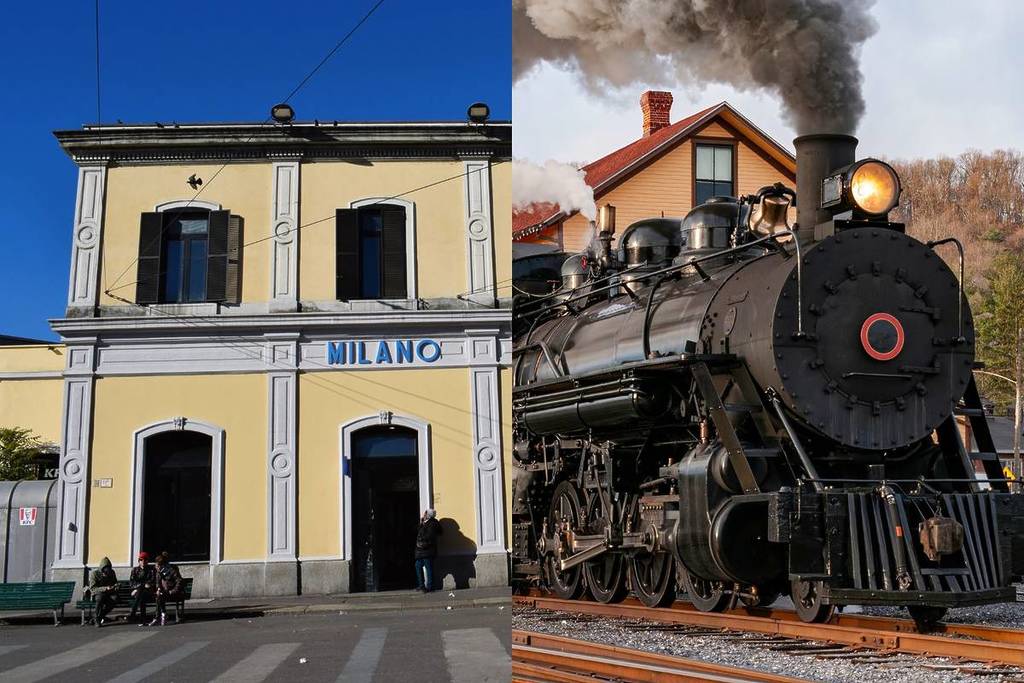
Milan’s Porta Genova station closes, but its name will long remain in the city’s urban memory. Opened in 1870 as Porta Ticinese, it has been one of Milan’s most vibrant railway gates for more than 150 years, connecting the Lombard capital with many towns in the Lomellina region. Over time it has seen generations of commuters, students, workers and Sunday travelers pass through, becoming a reference point not only for those who had to take the train, but also for those who frequented the Navigli, the Darsena and the Via Tortona area. With its 19th-century architecture, level tracks and level crossings that cut through the city, Porta Genova was a symbol of a popular Milan, made up of suitcases, returns and short but important departures.
Porta Genova closes… Now what?
The station’s final closure, sanctioned with the arrival of the last historic steam train on Saturday, December 13, on an emotionally charged morning, marks the end of an era and the beginning of a phase yet to be written. Rail traffic has been moved to other, more modern Milanese stations that are better integrated with the metro and suburban network, while the Porta Genova area prepares for a profound transformation.
There is talk of urban regeneration projects, possible tourist reuse of the tracks for historic trainsets, and even the idea of a museum dedicated to the history of Milan’s railways and mobility. For the neighborhood, and more generally for the Milanese, the issue today is not just “where the next train will leave from,” but how this space can become a new meeting place, culture and shared memory in the heart of Milan.