

Living in Milan in 2025 means devoting as much as 72 percent of your net salary to rent alone.
This is not a guess, but the official figure from the Deutsche Bank Research Institute’s Mapping the World’s Prices 2025 report.
The Lombard capital surpasses even Rome in the unsustainable ratio of rents to salaries: in fact, the Capital stops at 65 percent.
A negative record that places Milan among the worst European cities for housing affordability, behind only London (75 percent) and the Madrid-Barcelona pair (74 percent).
For those who earn the average salary of 1,800 euros per month, the reality is stark: after paying rent, there are barely 500 euros left to live on all month.
The Deutsche Bank Research Institute Study: a snapshot of the European housing market.
The Deutsche Bank Research Institute analyzed 69 world cities, including 28 European ones, comparing average net wages and rental costs for one-bedroom apartments in urban centers.
The study shows a strong polarization: on the one hand, the “happy oases” of Northern Europe and Switzerland, on the other hand, the megacities in severe housing crisis.
The cities with the most favorable wage-to-rent ratios are:
- Geneva (29%)
- Luxembourg (34 percent)
- Frankfurt (34-35%)
- Zurich (35%)
- Helsinki and Vienna (below 40 percent)
Geneva is left with about 5,000 Swiss francs monthly after paying rent, the highest value in the world.
The cities with the worst ratios are:
- Istanbul (101%)
- Lisbon (116%)
- London (75%)
- Madrid and Barcelona (74%)
- Milan (72%)
Here the net salary is not even enough to cover the average rent.
Milan’s housing crisis: numbers that make you tremble
The average cost per square meter in Milan reaches 22.6 euros, the highest price among the Italian cities analyzed. For comparison: in Rome we are around 14-16 euros per square meter. Milan is almost 50 percent more expensive.
But the real problem is the relationship with salaries. In Milan, the average net salary is around 1,800 euros per month, higher than in the capital (which stops at 1,380-1,400 euros), but this advantage is completely cancelled out by the much higher rents.
A standard 50-square-meter one-bedroom apartment in the suburbs costs an average of 1,130 euros plus condo expenses, for a total of about 1,300 euros monthly. In the historic center the situation becomes even tougher: some two-room apartments exceed 2,838 euros per month, almost double the city average.
The “30% Rule”: the parameter that Milan completely disavows

International guidelines state that rent should not exceed 30 percent of net salary. This threshold is meant to ensure savings, contingencies and a decent living. In Europe, however, it is often exceeded.
In Milan, the percentage more than doubles: 72 percent of the salary is absorbed by rent.
For a young professional or a couple, it means living on about 500 euros a month for all other expenses.
The result is a daily routine made up of renunciations and a constant risk of not making ends meet.
Living in Milan: a serious economic compromise
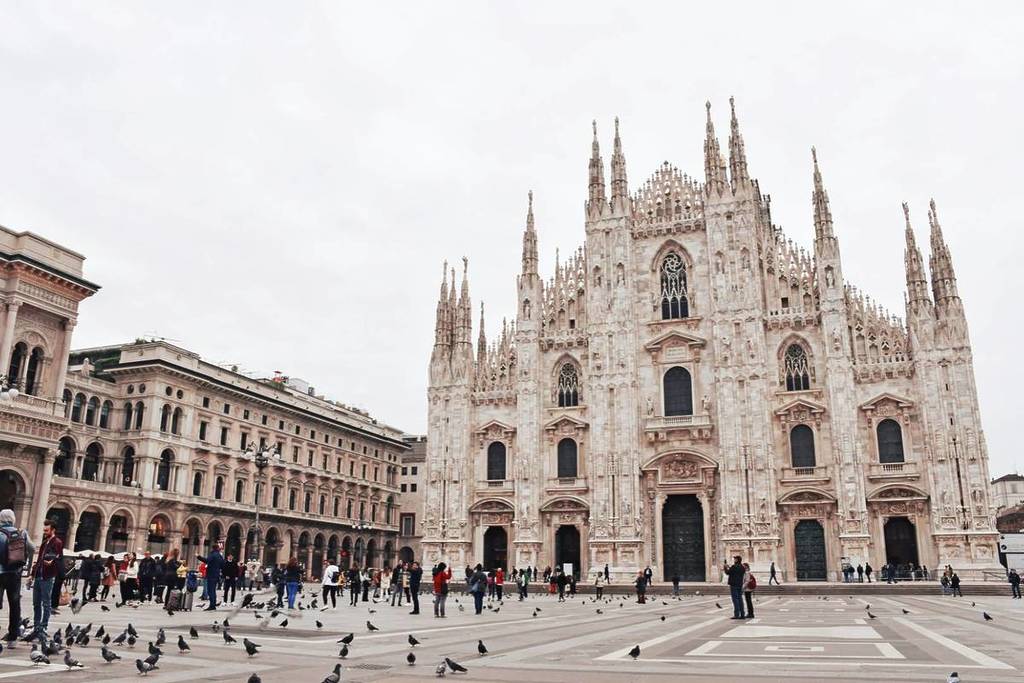
For those considering a move to the city, data from the Deutsche Bank Research Institute represent a real watershed decision.
Living in the Milanese capital, especially in the central areas, means accepting a drastic compromise: more than half of the income disappears in rent.
The alternatives are not always pleasant: moving to the suburbs with long commute times (thus having to wake up earlier in the morning and return home later in the evening), sharing an apartment, or drastically cutting all other expenses.
According to CNA, costs could rise another 7 percent to 9 percent, making the situation even more difficult.
Milan remains an attractive, dynamic city full of opportunities. But a glaring paradox emerges: a city that focuses on growth risks repelling the very people who should be supporting it.