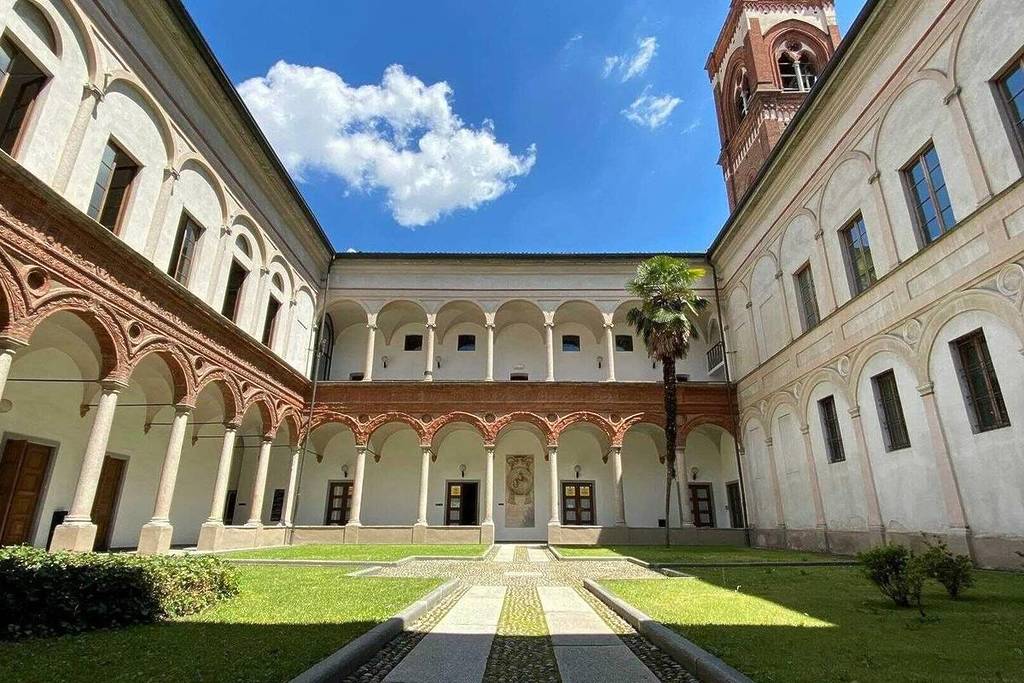
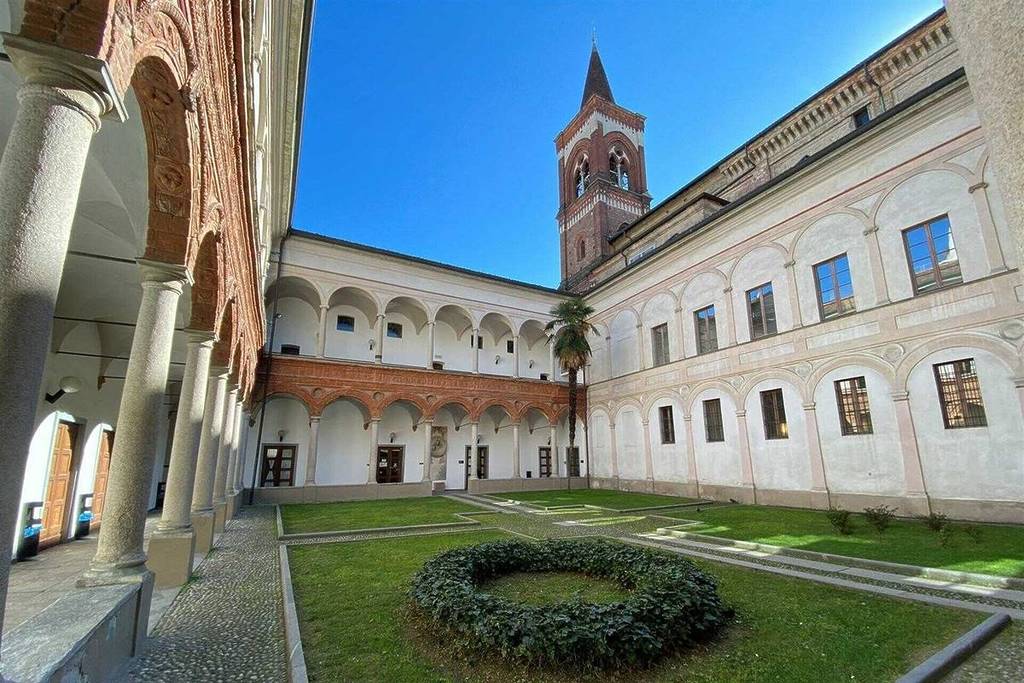
With its art galleries, cloisters used for cultural exhibitions of all kinds, and magnificent halls for unforgettable musical experiences, the Casa Cardinale Ildefonso Schuster—just a stone’s throw from Milan’s Duomo—earns a special mention among the city’s leading venues for major artistic and cultural initiatives. The intricate Renaissance architectural elements and the evocative 16th-century cloisters—whose details echo Bramante’s style—lend this venue in the heart of Milan an air of grandeur and elegance. This season, the inner cloisters of the Casa Cardinale Ildefonso Schuster come alive with Candlelight concerts.

A Brief History of the Casa Cardinale Ildefonso Schuster
Just a short walk from the Duomo lie the splendid 16th-century cloisters of the Centro Ambrosiano, commissioned by the Trivulzio family and restored by renowned architects such as Luca Beltrami, Cesare Nava, and Antonio Cassi. The building’s origins date back to 1232, when the Order of St. Anthony the Abbot established a hospital there to care for patients suffering from shingles. A pivotal moment in the complex’s history came in 1576, when Saint Charles Borromeo purchased it and entrusted it to the Theatine clergy, who transformed it into an important religious and cultural center in post-Tridentine Milan.
During the 19th century, the building changed functions several times, serving as a military depot and then as a prison for political prisoners during the Napoleonic and Austro-Hungarian periods, before being restored in the 20th century and transformed into the Cardinal Ildefonso Schuster House.
What is the Casa Cardinale Ildefonso Schuster used for today?
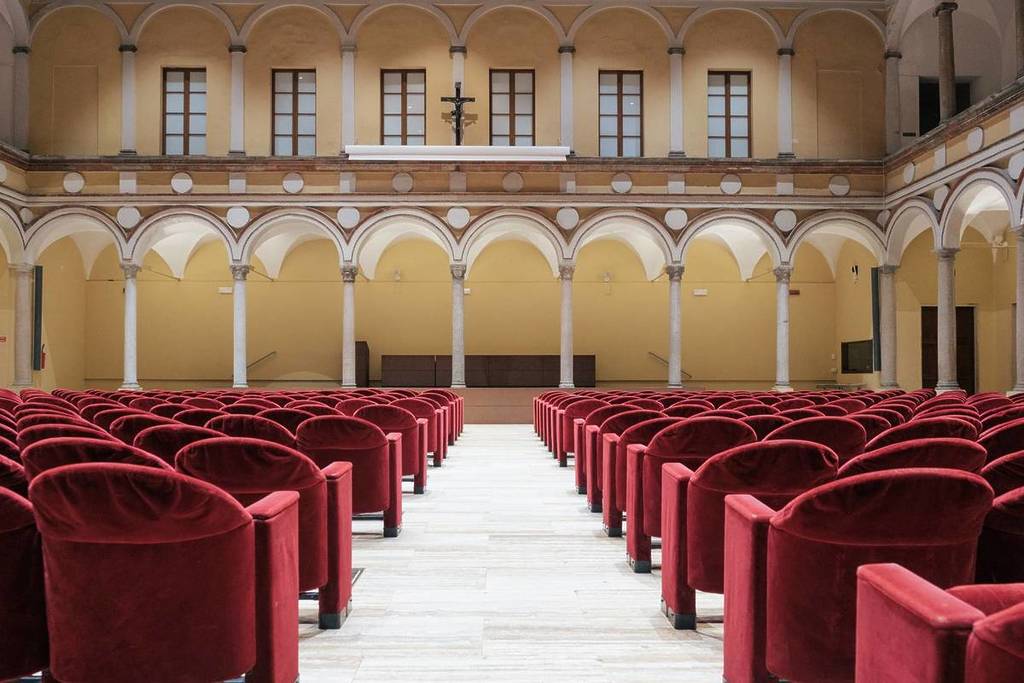
The Casa Cardinale Ildefonso Schuster is renowned for hosting prestigious conferences, lectures, and conventions in its elegant halls. The Bramante cloisters, on the other hand, often host temporary art and photography exhibitions. Finally, on select dates, Casa Schuster is illuminated by the light of a thousand candles during the evocative Candlelight concerts. During these musical tributes, the historic walls welcome talented musicians who reinterpret the melodies of Vivaldi, Coldplay, Ludovico Einaudi, and many other artists in a moving classical arrangement.
How do I get to Casa Cardinale Ildefonso Schuster?
Located just over 500 meters from Milan Cathedral, you can reach the venue on foot or by public transportation. The bus lines serving this location are 57, 60, 65, and 85; if you prefer the tram, take line 12 or15. The Schuster House is also accessible by metro via lines M1 or M3, both of which stop at Duomo. Whether by bus , tram, or metro, there are plenty of options, though we recommend a pleasant stroll through the historic streets of the city.
Frequently Asked Questions
1. How many seats are there in the Salone Pio XII?
The Pio XII Hall offers 440 seats, making it perfect for large conferences and concerts, with 8 additional rooms seating 30–90 people each for seminars and meetings.
2. Is Casa Schuster accessible to people with disabilities?
Yes, the complex is accessible via elevators and barrier-free pathways in the cloisters and the Pio XII Hall.
3. Who was Cardinal Ildefonso Schuster?
Archbishop of Milan from 1929 to 1954, known for his spirituality and closeness to the people during World War II.
Other iconic Milan landmarks near Casa Schuster
The strategic location of Casa Cardinale Ildefonso Schuster in the heart of Milan allows visitors to create an extraordinary cultural itinerary among the city’s many historic sites. Just a short walk away are the Basilica of Sant’Ambrogio, the Duomo with its terraces, Santa Maria delle Grazie with Leonardo’s *The Last Supper*, and the Castello Sforzesco. Less well-known but equally important are the San Fedele Cultural Center complex —which houses the San Fedele Auditorium, often the venue for immersive events—and the Crypt of San Sepolcro, a medieval underground church built directly atop the heart of the ancient Roman forum of Mediolanum.