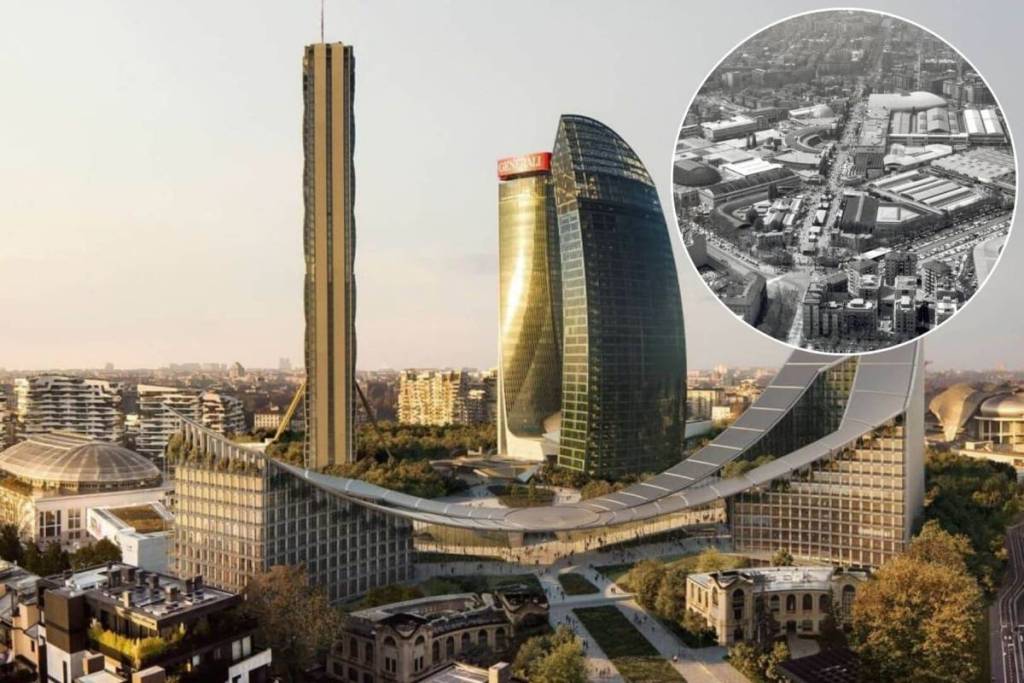

If you’ve passed by Largo Domodossola recently, you’ve probably noticed it: a long wave of wood and solar panels is completing the final section of CityLife’s skyline.
During the FAI Fall Open House, nearly 5,000 people lined up to see it up close.
It is the final chapter of a story that began in 2007, when bulldozers began clearing the 255,000 square meters of the old trade fair grounds.
Today, CityLife in Milan is the city’s largest pedestrian area. No cars on the surface, three skyscrapers you’ll recognize at a glance, and a park that has grown from the project’s original 170,000 square meters to 178,000.
You can get there by taking the M5 to Tre Torri or the M1 to Amendola.
What the Milan Trade Fair was like before the Three Towers
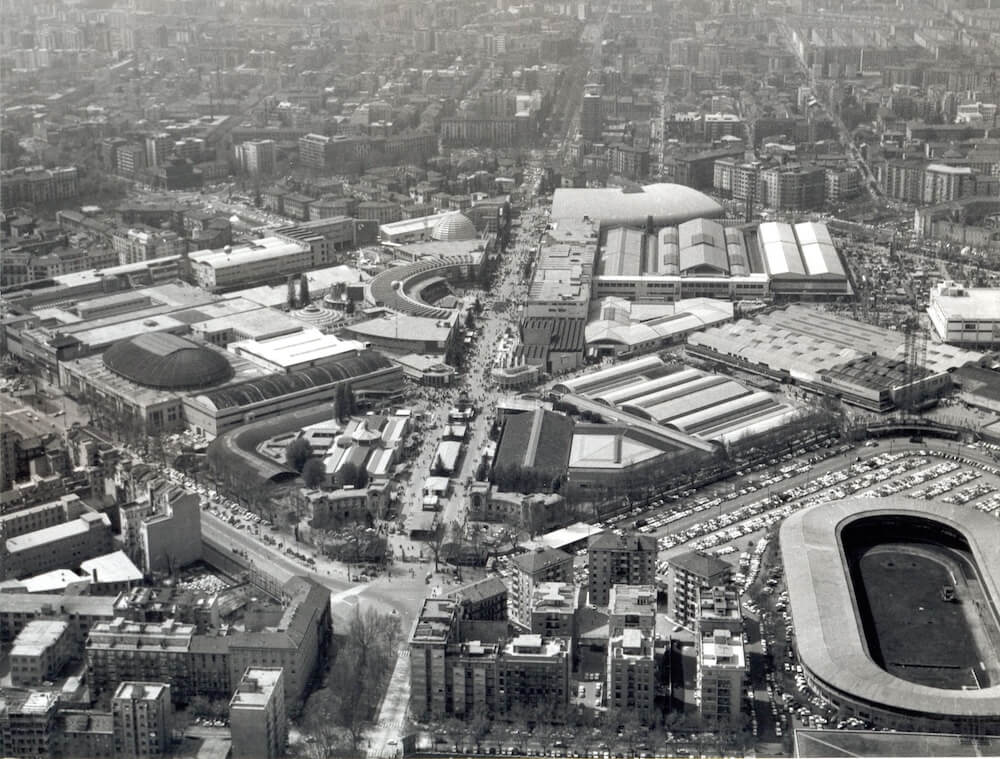
For generations of Milanese, “going to the Fair” has been a ritual. Since 1923, the Milan Trade Fair had occupied the former Piazza d’Armi, and, exhibition after exhibition, it had grown to 26 pavilions, even incorporating the Portello area of the old Alfa Romeo factories.
Every major trade show meant traffic spikes throughout the entire area.
Among the few buildings spared is the Palazzo delle Scintille, built in 1923. During the war, it hosted concerts from La Scala, which had been closed following the bombings, and during the COVID-19 pandemic, it served as Italy’s largest vaccination hub.
Today, under its new name, CityOval, it has once again become a venue for major events.
The Straight One, the Crooked One, the Curved One… and now the Reclining One
The Milanese have christened the city’s towers as if in a Western: Isozaki’s “Straight One” (2015), Hadid’s “Crooked One” (2018), and Libeskind’s “Curved One” (2020). Since 2015, a replica of the Madonnina has also stood atop the “Straight One,” facing the one on the Duomo.
The fourth is coming now, and it’s horizontal. CityWave, designed by Bjarke Ingels’ Danish firm, connects two buildings with a 140-meter-long canopy covered by approximately 11,000 square meters of solar panels.
Ingels describes it as a 21st-century Galleria Vittorio Emanuele. It will serve as the new gateway to the neighborhood, and completion is scheduled for late 2026.
Meanwhile, the model is setting a precedent for urban redevelopment in Milan. From the Porta Romana rail yard to the former slaughterhouse—which will become the ARIA neighborhood—upcoming projects are also focusing on parks and pedestrian paths.
Now is the perfect time to visit: through October 18, the CityOval is hosting Patek Philippe’s free exhibition on the art of watchmaking. Online reservations are required, and it’s open until 10 p.m. on weekends. Here’s a tip: enter from the Fountain of the Four Seasons in Piazza Giulio Cesare and walk through the park toward the towers, watching the skyline change with every step.