
Every day you cross Piazza Oberdan, between Corso Buenos Aires and the Porta Venezia toll booths, rushing toward the M1. Just a few meters beneath your feet lies the Albergo Diurno Venezia, which opened on January 18, 1926.
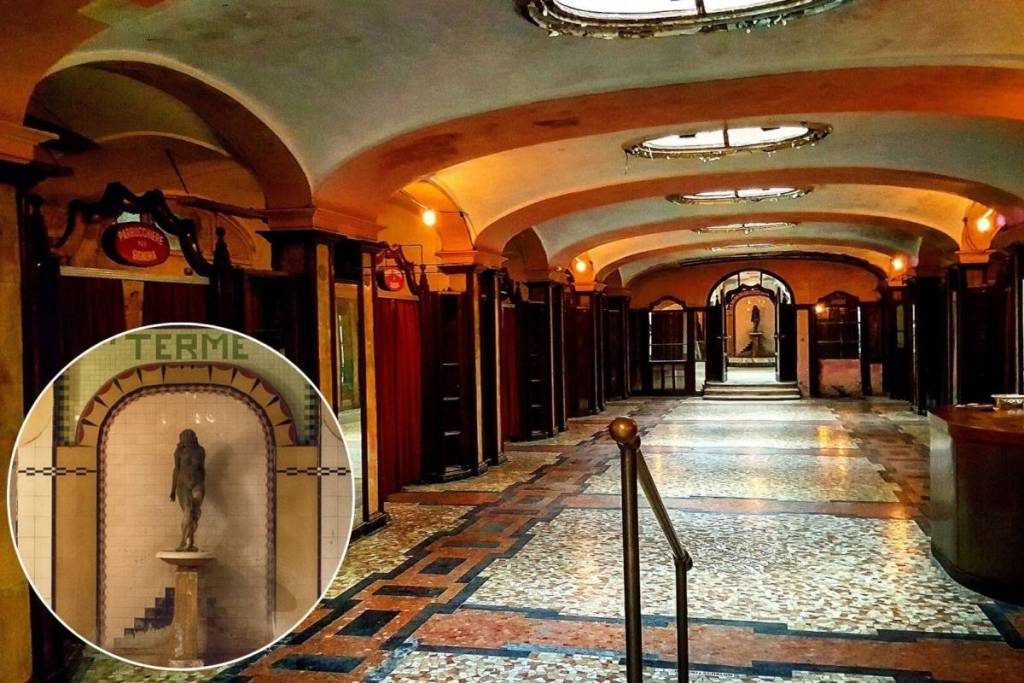
Those who managed to visit it during the FAI open house events still found a columned hall, corridors lined with ceramics, and a fountain featuring a bronze statue of the goddess of health.
In the meantime, here’s what this underground part of Milan holds and why the last barber left just twenty years ago.
Spas, barbershops, and luxury baths: what went on in the hotel where no one slept
Forget about a hotel. The Albergo Diurno Metropolitano Venezia was a service center open every day from 7 a.m. to 11 p.m., designed for travelers and for Milanese residents who didn’t have a bathroom at home.
Newspapers of the time touted it as “the most elegant in Europe.”
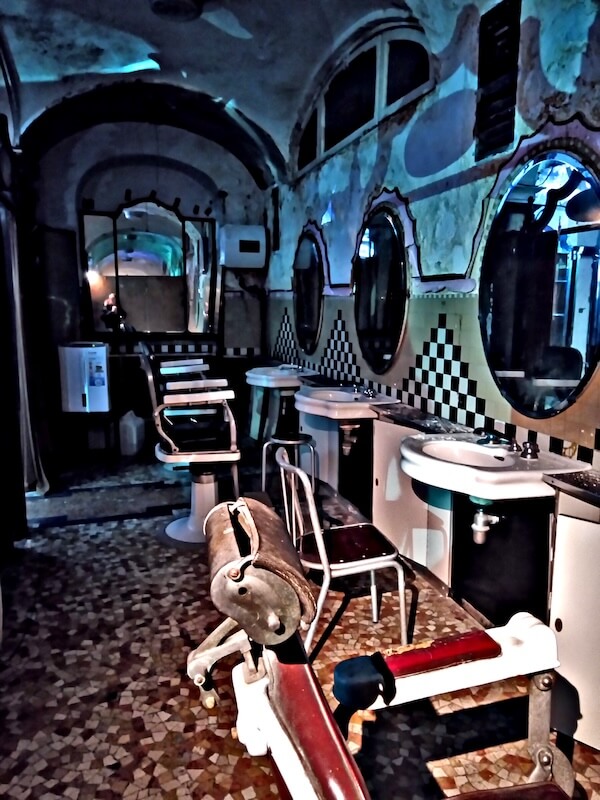
You’d go downstairs and find showers, six luxury bathrooms with bathtubs, barbershops for men and women, and manicure and pedicure services.
In recent decades, a travel agency and a photographer’s studio were also added: essentially, a neighborhood spa nearly a century before Milan was filled with wellness centers.
Portaluppi’s signature, the goddess Hygieia, and the monument Milan never built
The furnishings and decorations are attributed to Piero Portaluppi, the architect of Villa Necchi Campiglio and the Hoepli Planetarium, both just a short walk from here.
The statue of Hygieia at the end of the baths’ corridor, on the other hand, bears the signature of sculptor Luigi Fabris.
From the last barber to the 6,500 people waiting in line: how the Diurno became the “Pompeii of the 20th Century”
The baths closed in 1985, and in the mid-1990s, many artisans left, selling off part of the furnishings. The last barber was evicted by the city only in 2006, following a legal dispute.
Then came a very Milanese accident. The wheel of an AMSA truck smashed through a skylight, and for years the skylights remained paved over from above and shored up from below.
In 2014, the FAI reopened it for the Spring Open House, and 6,500 people lined up to descend into one of Milan’s most surprising historic underground sites.
Then-president Andrea Carandini called it a “20th-century Pompeii”: for the Foundation, it is one of the largest, most elegant, and best-preserved public bathhouses in Europe.
Can you visit the Diurno? What’s happening beneath Piazza Oberdan (and what you can see today)
No, and it won’t be possible for a while yet. Asbestos removal and safety measures were scheduled for 2025, and work on the square above was completed in October 2026.
According to the City, the nearby Casello Daziario Ovest, which will be part of the same museum, is expected to open in January 2027.
If you happen to pass by, though, take a look around. On the Via Tadino side, the vintage shelter still stands, and the two concrete columns in the square were once used to vent the fumes from the boilers.
That’s all you can see, on the surface, of one of the most beautiful places beneath the city of Milan.